
THE BLOOD MARKERS YOU SHOULD KNOW ABOUT BEFORE YOUR NEXT BLOOD DRAW
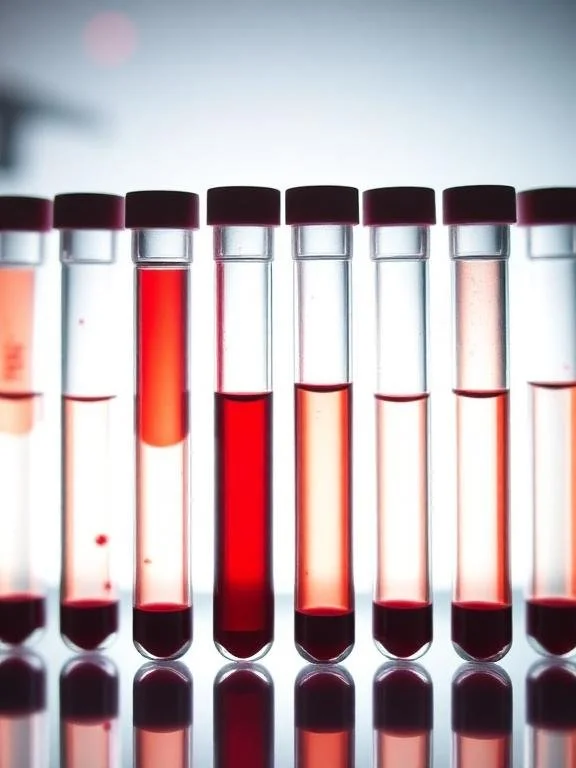
Standard bloodwork is a starting point but it won’t give you the full picture of your health.
Your doctor may order routine labs during your annual physical or when you’re feeling unwell. Those tests can provide valuable information about what’s happening inside your body.
But here’s something important to understand:
A test can only tell you about something that was actually measured.
If a marker wasn’t ordered, you won’t know what it says.
That doesn’t mean you need every blood test available. In fact, more testing is not automatically better healthcare.
It means you should understand what is being tested, what isn’t, and what additional information might be appropriate based on your individual health picture.
Be the CEO of Your Health
Your doctor is an important part of your healthcare team. But you are the person who lives in your body 24/7.
You know your symptoms, your history, your family history, your medications, your diet and the changes you've noticed over time. Think of your health like a business. Your doctor is one of your experts. You are the CEO. Being the CEO doesn't mean diagnosing yourself or distrusting your healthcare providers. It means asking questions, understanding your information and participating in decisions about your care.
One of the simplest places to start?
Know your labs.
Don't Just Ask, “Are My Labs Normal?”
One of the most common questions people ask after bloodwork is:
“Are my labs normal?”
But “normal” doesn't necessarily mean that every aspect of your health has been evaluated.
A laboratory reference range tells you where your particular result falls compared with the reference population used by that laboratory.
It doesn't automatically answer:
What caused a symptom?
What wasn't tested?
What has changed compared with your previous results?
What should be monitored over time?
What additional testing, if any, makes sense for your situation?
Instead of only asking:
“Are my labs normal?”
Start asking:
“What did we test?” and “What did we not test?”
This is especially valuable because your trend can sometimes tell you more than one isolated number.
1. Thyroid: Don't Stop at TSH
Thyroid testing commonly starts with:
TSH
Free T4
Ask for these additional markers to be added to your labs by your healthcare provider:
T3
TPO antibodies
Thyroglobulin antibodies (TgAb)
Why can these matter?
TPO antibodies and thyroglobulin antibodies can help identify thyroid autoimmunity, including Hashimoto's thyroiditis.
Thyroid antibodies can also be present when thyroid hormone levels are still normal.
That doesn't mean everyone needs a complete thyroid panel. The appropriate tests depend on the clinical question you're trying to answer.
2. Epstein-Barr Virus (EBV): Know Your Antibody Pattern + Possible Reactivation
Epstein-Barr virus is extremely common. Most adults have been infected at some point, and after infection, EBV remains latent in the body.
You can have been exposed to EBV without ever experiencing classic mononucleosis symptoms.
Ask for these additional markers to be added to your labs by your healthcare provider:
VCA IgM
VCA IgM generally appears early during a new EBV infection and typically declines within weeks.
A positive result does not automatically mean a first-ever infection, however, because antibody patterns can be more complicated than a simple positive/negative interpretation.
VCA IgG
VCA IgG usually develops during the initial infection and typically persists for life.
A positive result generally indicates that you've been infected with EBV at some point.
EBNA IgG
EBNA IgG usually develops later after the initial infection and then persists.
VCA IgG together with EBNA IgG generally supports past infection.
EA-D IgG
Early antigen antibodies may be detected during active infection and can sometimes be present during reactivation.
Why Does EBV Matter?
EBV isn't simply a virus you “had” and forgot about.
Researchers are investigating whether EBV reactivation may play a role in some people with persistent post-viral symptoms, including Long COVID.
EBV has also been associated with immune dysregulation and is being studied in connection with several autoimmune diseases, including:
Multiple sclerosis (MS)
Systemic lupus erythematosus (SLE)
Sjögren's syndrome
Rheumatoid arthritis
Autoimmune thyroid diseases, including Hashimoto's thyroiditis and Graves' disease
Researchers are continuing to investigate how EBV may interact with the immune system and whether it contributes to autoimmune disease in susceptible individuals.
The research is evolving.
That's why understanding your EBV antibody pattern can provide more context than simply knowing that you “tested positive for EBV antibodies.”
Know the pattern - not just “positive” or “negative.”
3. Iron: Don't Wait for Anemia
A CBC can help determine whether you have anemia.
But a CBC doesn't tell you everything about your iron status.
Ask for these additional markers to be added to your labs by your healthcare provider:
Ferritin
Serum iron
TIBC / transferrin
Transferrin saturation
CBC
Why does this matter?
Iron deficiency can occur before obvious anemia develops.
Ferritin provides information about stored iron, although ferritin can also be affected by inflammation and other factors.
Low iron stores may be relevant when investigating concerns such as:
Fatigue
Weakness
Hair changes
Reduced exercise tolerance
The point isn't to assume every symptom is caused by low iron.
It's to understand that iron status is more than a hemoglobin number.
Don't wait until you're anemic to start paying attention to your iron status.
4. B12 + Folate: Don't Just Check B12
Vitamin B12 is important for the nervous system and blood-cell formation.
Ask for these additional markers to be added to your labs by your healthcare provider:
Vitamin B12
Folate
Methylmalonic acid (MMA)
Homocysteine
Why?
MMA can be useful when evaluating possible functional B12 deficiency, particularly when serum B12 is borderline.
Homocysteine can also be influenced by B12 and folate status, although it is not specific to either nutrient and can be affected by other factors.
The larger lesson is that a single serum vitamin level doesn't always tell the entire nutritional story.
Know your baseline.
5. Metabolic Health: Know Your Numbers
Some of the most useful health information comes from understanding your metabolic markers.
Ask for these additional markers to be added to your labs by your healthcare provider:
Fasting glucose
Hemoglobin A1c
Lipid panel
CMP
Blood pressure
These can provide information about:
Blood sugar regulation
Longer-term glucose patterns
Cholesterol and triglycerides
Kidney and liver markers
Electrolytes
Blood pressure
Your trend gives you context.
Tracking your numbers over time can help you and your healthcare provider identify meaningful changes and determine whether additional evaluation is appropriate.
6. Female Hormone Health: Know Your Baseline
Hormones aren't only something to think about when you're experiencing a problem.
Hormonal patterns change throughout a woman's life - including during the reproductive years, pregnancy, postpartum, perimenopause and menopause.
Ask for these additional markers to be added to your labs by your healthcare provider:
Estradiol (E2)
Progesterone
FSH
LH
Testosterone
SHBG
DHEA-S
Prolactin
AMH
Why does this matter?
Knowing your baseline can give you something to compare against as your body changes over time. Hormones fluctuate significantly throughout the menstrual cycle, and the usefulness of a test can depend on when it is measured and what question you're trying to answer.
Hormonal information may be relevant when evaluating changes involving:
Menstrual cycles
Fertility
Energy
Mood
Sleep
Skin
Hair
Body composition
Sexual health
Disregulation due to underlying sickness
7. Male Hormone Health: Know Your Baseline
Hormone health matters for men, too.
Hormone levels can change with age and can be influenced by overall health, medications, sleep, body composition and other factors.
Ask for these additional markers to be added to your labs by your healthcare provider:
Total testosterone
Free testosterone
SHBG
LH
FSH
Estradiol
Prolactin
DHEA-S
Why does this matter?
Hormones can play a role in:
Energy
Muscle and body composition
Libido
Sexual health
Fertility
Mood
Bone health
And just like with other health markers, one isolated result doesn't necessarily tell the whole story.
When testosterone deficiency is suspected, for example, testosterone levels are generally interpreted alongside symptoms and appropriately timed repeat measurements rather than relying on one isolated result.
8. Inflammation: Know the Basic Markers
When inflammation is part of the clinical picture, common markers you may hear about include:
CRP
ESR
CBC with differential
CRP and ESR can provide information about inflammation.
A CBC with differential provides information about your blood cell counts, including different types of white blood cells.
But these tests have an important limitation:
They're clues - not diagnoses.
An elevated inflammatory marker doesn't automatically tell you what is causing the inflammation.
The goal isn't to order every autoimmune test on earth.
It's to understand what information is available and investigate further when the overall clinical picture calls for it.
9. Advocate for Yourself at the Blood Draw, Too
Health advocacy doesn't stop once you're sitting in the phlebotomy chair.
If you tend to feel faint, anxious, or uncomfortable during blood draws, you can ask to lie down while your blood is being drawn.
You can also ask:
“What is the minimum amount of blood needed for these tests?”
Different tests have different collection requirements, so the amount needed will vary. Not every tube necessarily needs to be filled to the same level, depending on the tests being performed and the laboratory’s requirements.
The point is simple:
You’re allowed to ask what’s being collected, how much is needed, and why.
You are an active participant in your healthcare - even in the phlebotomy chair.
This article is intended for educational purposes only and is not a substitute for individualized medical advice, diagnosis or treatment.
The best lab panel for you depends on your individual health history, symptoms, medications, age, risk factors and goals.
Use this information as a starting point for a conversation with your qualified healthcare provider.
